Now available on iOS and Android


Adley Health is built for family caregivers — giving them a shared system to coordinate home care, advocate for loved ones, and manage chronic illness proactively, starting with Parkinson’s and Alzheimer’s. Less chaos. Fewer dropped balls. More confidence that nothing important is being missed.
Adley Health keeps everyone on the same page—family, friends, and providers—so you spend less time coordinating, more time advocating, and feel genuinely supported along the way.
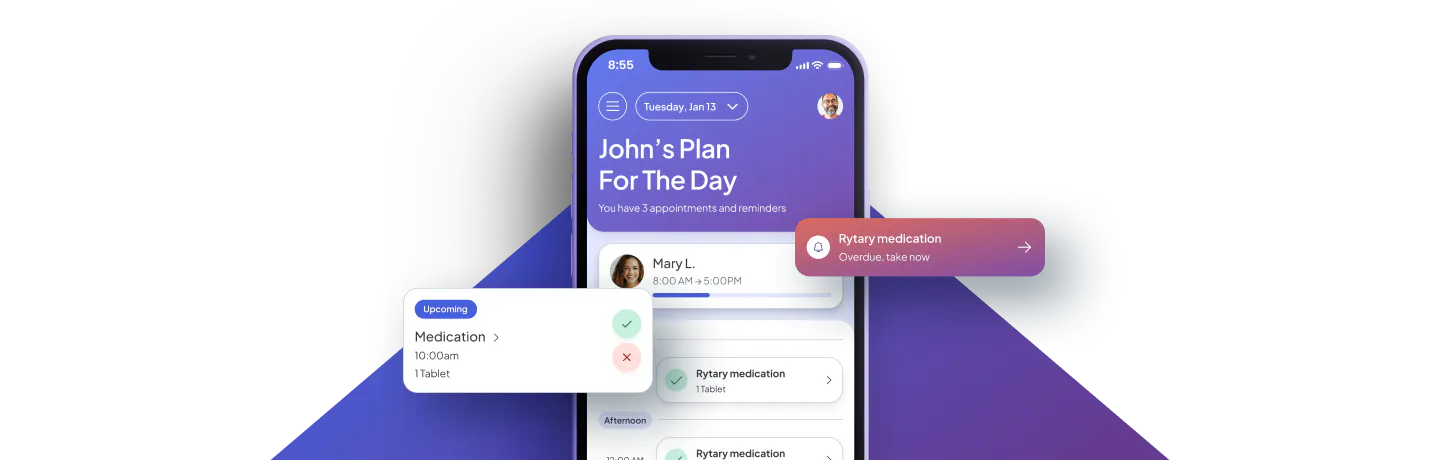
There is no real care coordination system for families. Home health software is built for agencies and compliance, not real family life. Doctors can make recommendations, but they can’t see what’s happening at home. Families are left to run complex care with tools that were never designed for this job. We built Adley because caregivers deserve real infrastructure.

Turn complexity into a clear care plan. Capture medical history, medications, routines, preferences, emergency info, and care goals — all in one structured, living system.

Turn the plan into shared, trackable work. Assign roles. Track tasks. Ensure nothing lives “only in someone’s head.”

Keep care in sync as life changes. Conditions evolve. Needs change. People step in and out. Adley evolves with you.

Adley is built for family caregivers. Adult children caring for parents. Spouses caring for partners. Families sharing responsibility across siblings and distance. People carrying care while raising kids and holding jobs. We’re designed for any chronic illness, and we’re starting with Parkinson’s disease, Alzheimer’s and dementia logic. These conditions are long, complex, and life-changing — and families deserve better tools.

Independence is important, but your independence doesn't need to mean "go it alone". Capture medical history, medications, routines, preferences, emergency info, and care goals in one structured, living place. As things progress, allow the app to progress with you, and provide infrastructure to support you and your Circle through it. Have piece of mind knowing you don't need to keep track in your head, and when something happens, everyone is following your plan without skipping a beat.

This is not a symptom tracker. This is not a notes app. This is not a task list. Adley is care infrastructure. Built for shared care, not solo tracking. Built for long-term, evolving conditions. Built for real life, not ideal life. Built to sit between families and healthcare systems. Adley Health is built for family caregivers — giving them a shared system to coordinate home care, advocate for loved ones, and manage chronic illness proactively.

My father was diagnosed with Parkinson’s Disease thirty years ago and this experience has shaped a lot of who I am and has helped me to understand the need for more caregiver support. We need a better journey, and I'm excited to make that my mission.
We’re ready to make caregiving more collaborative and less overwhelming. Whether you’re a patient, a caregiver, or “the figure it out person”, we want you to feel truly supported by your village throughout your medical journey. And for the others who have been in your shoes before, they want that for you, too.

As a clinician, one of the biggest challenges is truly knowing what’s happening with a patient between visits. Adley Health is going to be a game changer in the coordination of the care team by bringing everything into one centralized place. The ability for clinicians, patients, and the care team to stay informed and aligned has the potential to save clinics time and deliver truly comprehensive care. From both a provider and family care partner perspective, this is the kind of tool healthcare has been missing.